Freedom as a developing capacity
Seven Evolution Bands describe the author’s proposed relationship between a person’s structure and capacity to choose. The model asks what must be developed before a different response becomes possible.

EDUARDO CASAROTTO / A BRAZILIAN THEORY OF PERSONALITY
Eighteen theories of personality.
A new case for integration and change.
What do established approaches explain, and what remains unresolved? In Fundamentos da Virtologia, Eduardo Casarotto examines eighteen theories, identifies the gaps he sees in their accounts of the person, and sets out his own integrative proposal.
The central question is practical as well as theoretical: once a pattern has been described and understood, what capacity must be built in its place — and how?
Download the publishing presentation20 pages in English · The central reference work and the complete companion trilogy

THE DISTINCTIVE PUBLISHING PROPOSITION
Casarotto’s case is that none of the eighteen approaches examined combines five major strands in one architecture with a specified procedure for developing the dispositions needed for change.
Those strands are psychodynamic structure, human needs, personality traits, biological mechanisms and social learning. The book examines their contributions and proposes an account of how they connect. Its thirty-three virtues provide the targets of a practice-based approach to development, which the author calls inscription.
Seven Evolution Bands describe the author’s proposed relationship between a person’s structure and capacity to choose. The model asks what must be developed before a different response becomes possible.
Fifty-one needs, twelve temperamental axes, acquired character, psychic organization and learned dispositions form a model whose central claim is the connection between these layers.
The question moves from identifying a pattern to identifying the disposition to develop. The book proposes exercises, repetition, spacing and criteria for examining whether the response is available under pressure.
These are Casarotto’s comparative claims and proposed contributions, presented for editorial evaluation. The opening chapter records convergence, differences and the literature discussed for each approach.
EIGHTEEN APPROACHES / ONE COMPARATIVE ARGUMENT
The opening chapter considers philosophical views of the person, criteria for evaluating theories, and each school in turn. Select an approach to see a concise account of what the author proposes to add.
Recasts psychic organization as states of one ego and proposes an operational unconscious described through named factors.
Makes creative choice dependent on the individual’s developmental structure, rather than presuming equal capacity to choose.
Turns individuation into a proposed practice pathway with repetition, markers and criteria of consolidation.
Reinterprets early patterns within its own model and argues that character remains open to development throughout life.
Connects compulsive defensive patterns with its account of character armour and proposed restructuring through virtues.
Connects developmental tasks with the book’s account of neural maturation and age-appropriate demands.
Distinguishes inherited temperament from acquired character and proposes a learning mechanism for developing the latter.
Expands the needs map to fifty-one needs and uses Evolution Bands to explain changing motivational priorities.
Argues that removing obstacles to growth should be followed by deliberate practice to build the missing disposition.
Gives the developing capacity for freedom a proposed scale and a practice-based mechanism.
Connects the idea of a neuropsychic disposition with its proposed account of learning, consolidation and deliberate practice.
Extends its enquiry from describing differences between people to the formation, disruption and deliberate development of personality.
Adds a proposed route for deliberate learning within the biological limits of temperament.
Connects evolved motives with the book’s account of pride and selfishness and its proposed direction of development.
Uses repetition and reinforcement within a model that makes internal structure and expanding choice explicit targets.
Connects modelling and mastery through action with specified repetition, spacing and proposed checks of consolidation.
Connects expectations and situation-dependent responses with developmental capacity and the practice of responsibility.
Makes the capacity to construct alternative interpretations dependent on the individual’s developmental structure.
Summarized from Part I, Section 2 of the Portuguese third-edition manuscript. These descriptions represent the author’s reading of the theories and are not independent assessments of their effectiveness.
EDITORIAL EVALUATION
The clearest first reading is the chapter comparing the eighteen approaches. It establishes the book’s intellectual proposition and the questions on which the model should be examined.
A practice chapter shows the proposed movement from explanation to exercises and checks of consolidation. The book draws on learning and memory research; its specific applications remain proposals for evaluation.
The trilogy brings the model into cultural criticism, working life and education. All three books remain part of this presentation and may also be considered individually.
English editorial status
The translation record reports completion of the full Foundations text. Final affirmation choices and consolidation of the English volume remain in progress. Complete English texts of the companion trilogy are available.
Portuguese third edition, 2026 · ISBN 978-65-977193-6-5. The manuscript acknowledges a young body of independent studies. Proposed mechanisms and claims of clinical advantage should be critically evaluated alongside the supporting material.
A TRILOGY BY EDUARDO CASAROTTO
The culture we inherit. The work we do.
The people our schools help us become.
Three connected books.
Each can also be read on its own.
THE CONNECTION BETWEEN THE BOOKS
What holds a society in place, what might come next, and how do we prepare people for it?
In Three Reflections for the New Society, Eduardo Casarotto connects cultural criticism with the transformation of work and education. Virtology provides the shared framework for examining how institutions shape the person, and how people can change the institutions they inhabit.
God Bless America examines the cultural pull of status and comparison. The Third Wave of Work describes a relationship with work organized around meaning. The Pedagogy of Inscription asks what kind of school can prepare people for that world.
The author suggests reading them in this order. Each volume also stands on its own and can be read first.
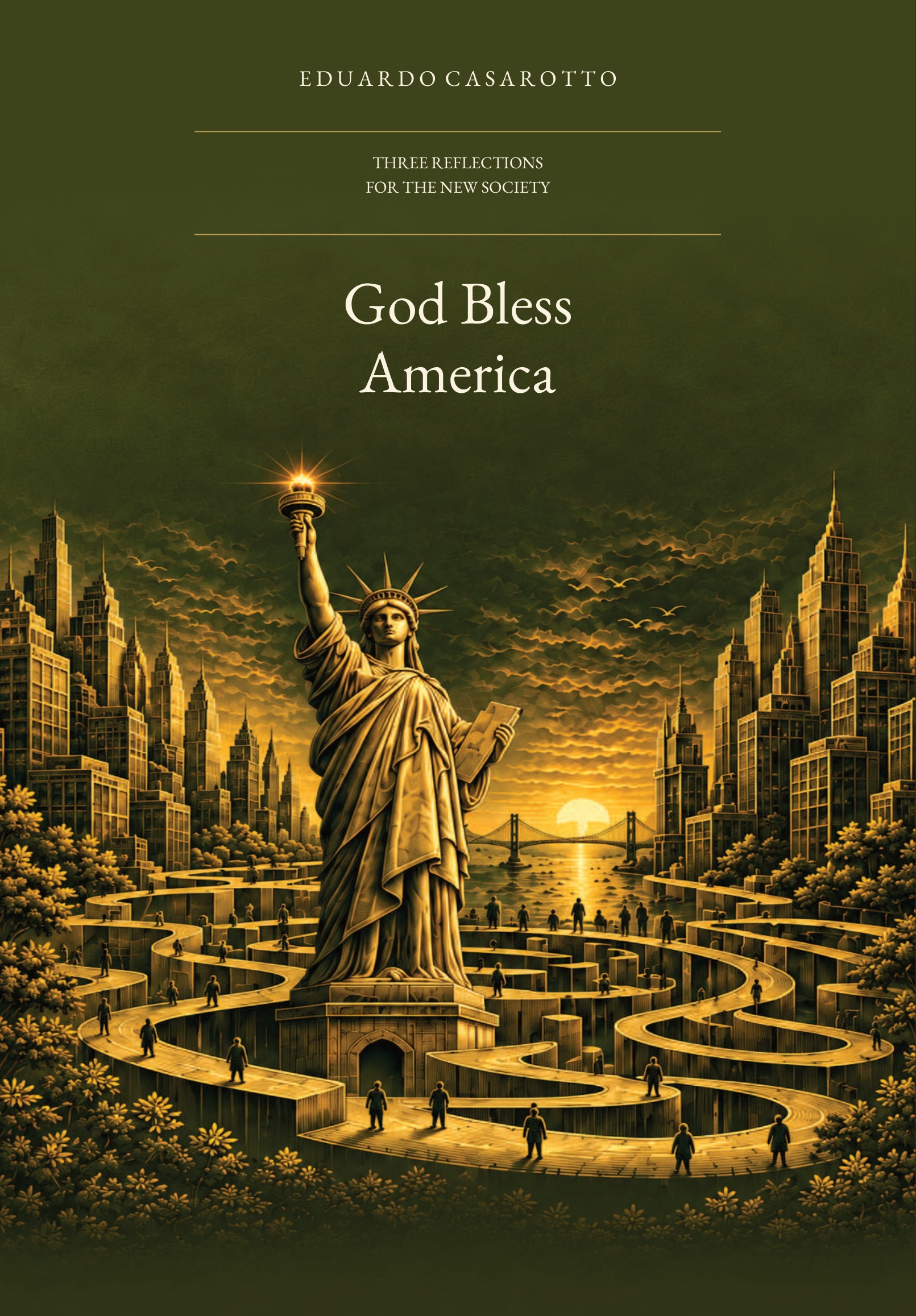
CULTURE AND THE SEARCH FOR RECOGNITION
A Virtological Analysis of Structural Americanism
Who taught us what a successful life should look like?
Eduardo Casarotto proposes structural Americanism as a way to examine how American-centered ideals of achievement become standards of worth across borders. The book follows the search for importance through familiar institutions and everyday habits.
A school reunion, a suburban street and a social media feed become settings in which people learn what deserves admiration. Casarotto connects cultural criticism with Virtology, his framework for personality and human development, to ask how those standards become personal ambitions.
Explore this bookFamily life, high school, the prom and the school reunion reveal the relationship between belonging and performance.
The American Dream, popular entertainment, hustle culture and algorithmic feeds shape aspirations.
The book examines dominance alongside resistance, solidarity and possibilities for institutional humanization.
The analysis distinguishes a cultural structure from the people who live within it. American traditions of dissent, solidarity and care are part of the book’s account.
Why can success feel compulsory even when it fails to bring a satisfying life? God Bless America examines the culture that teaches people what success should look like. Casarotto argues that American-centered ideals of achievement have become influential standards through which individuals and societies measure their worth.
His organizing concept, structural Americanism, describes a pattern reproduced through institutions, stories and habits of recognition. The opening chapters place this proposal in conversation with accounts of hegemony and cultural imperialism, then connect cultural power with the search for importance, acceptance and approval.
The argument becomes concrete in family relationships, high schools, the prom and school reunions. It extends into suburban life, consumption, military reverence, popular mythology and the promise of the American Dream. Later chapters examine hustle culture, Silicon Valley, digital attention, political leadership and war.
The book also considers dissent and solidarity, and uses other national contexts to explore patterns the author understands as human rather than uniquely American. Its final movement asks how personal capacities and institutional environments might support different responses. A glossary and twelve exercises bring the question into the reader’s own life.
For readers of this book
Readers of cultural criticism, social philosophy and the psychology of status. Also relevant to educators and people working with institutional change.
Its place in the trilogy
It explains the cultural resistance to the changes proposed in the other two books.
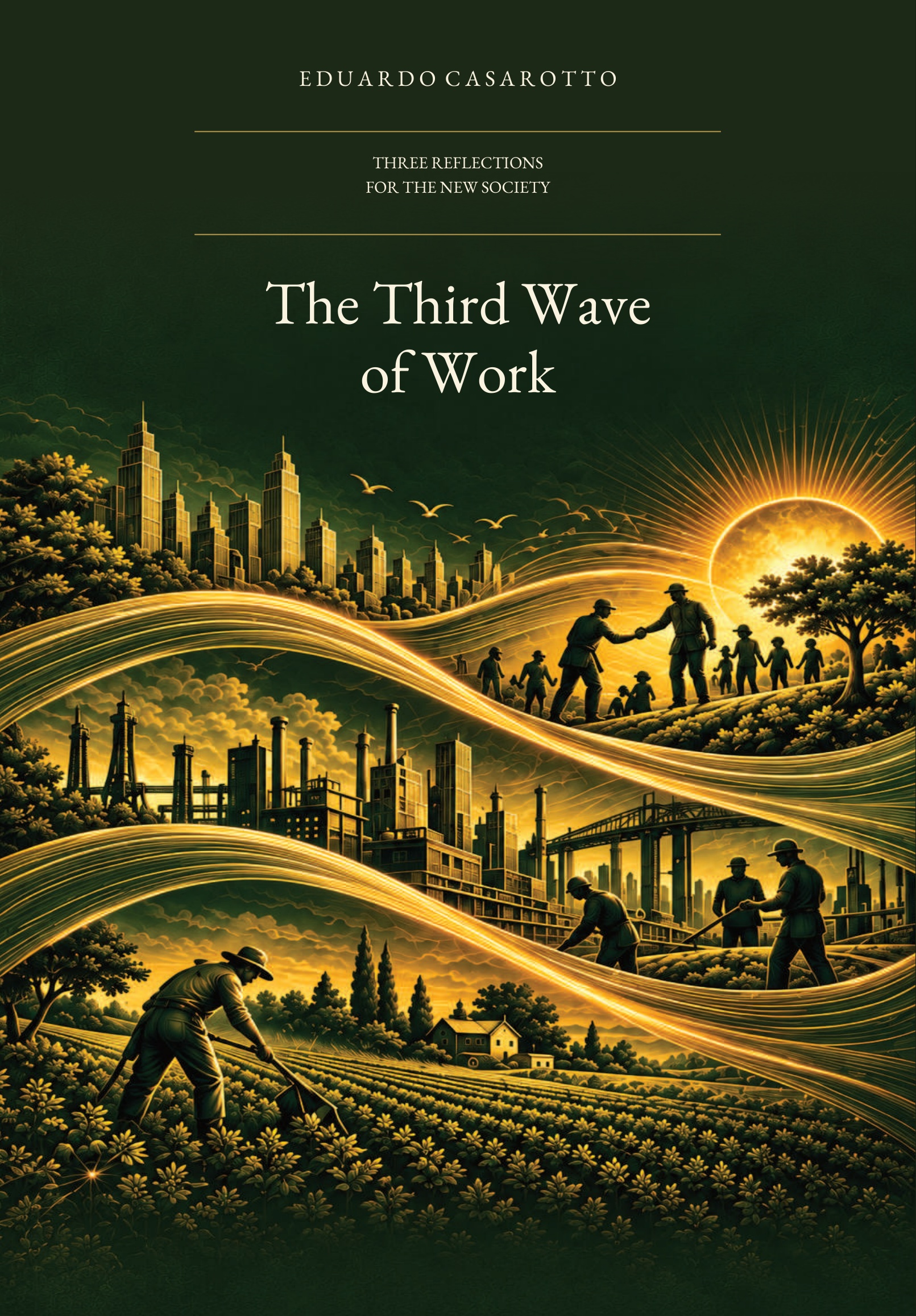
WORK, IDENTITY AND PURPOSE
From Survival to Status, from Status to Meaning
What moves a person to work?
Survival, status and meaning organize very different relationships with work. Casarotto examines these orientations through Virtology and asks why people in the same organization can experience the working day so differently.
The third wave places identity, purpose and contribution at the center of work. The transition involves both the person and the organization: what people seek, what managers reward and which working conditions an institution permits.
Explore this bookSurvival centers on security. Status centers on comparison and power. Meaning centers on identity, purpose and contribution.
Generational conflict, provider expectations, political performance, AI and automation reveal the friction between orientations.
Leadership, recognition, rules and working conditions become part of the humanization of work.
The three waves can coexist in the same society, workplace or family. The book does not assign every member of a generation to one wave.
A young person refuses a job that an older generation would have valued. An employee keeps achieving yet feels that the work means little. The Third Wave of Work approaches these tensions through a question about motivation: what is work for?
Casarotto proposes three orientations. The first organizes work around survival. The second gives priority to competition, status and importance. The third connects work with identity, purpose and contribution. These orientations overlap in time and can coexist within the same institution.
The book follows the forces pressing for change, including generational conflict, expectations surrounding the provider role, and AI and automation. Chapters on reversism, antipersona and the political stage extend the argument to the ways people and institutions respond to changing expectations.
The final movement considers how individuals and organizations change waves. It reexamines leadership and humanization through working conditions, institutional rules and human needs. The proposal asks organizations to examine the conduct they reward and the forms of contribution they make possible.
For readers of this book
Readers interested in the future of work, organizational culture and social change, including managers, human resources professionals and educators.
Its place in the trilogy
It describes the world of work for which The Pedagogy of Inscription proposes a different kind of school.
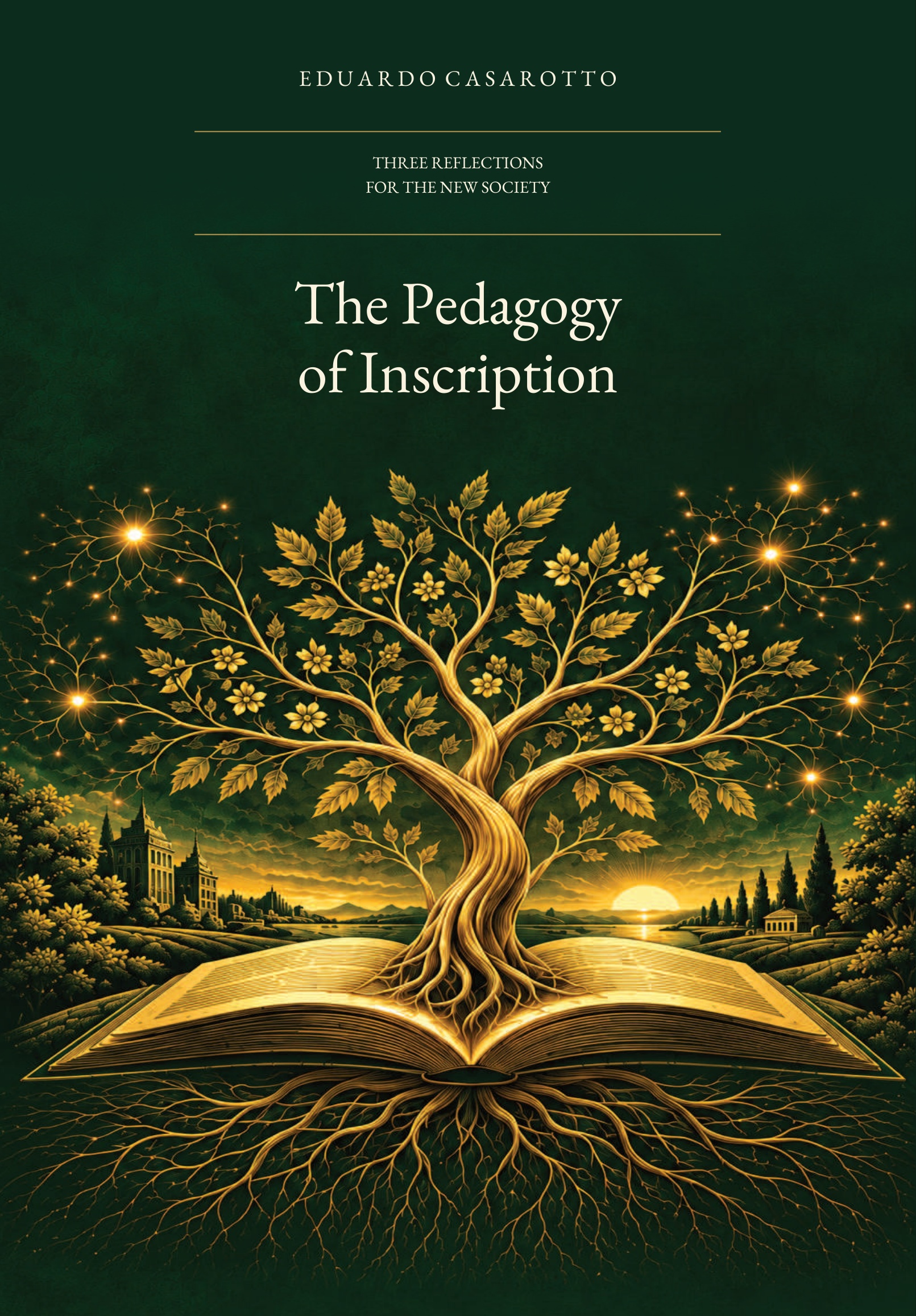
EDUCATION AND PERSONALITY DEVELOPMENT
What School Shapes as It Teaches
What does school shape as it teaches?
Lessons convey subject matter. Assessment, discipline, relationships and school rules also shape ways of responding. Casarotto asks how schools can take responsibility for this formative role and prepare students for a world that demands cooperation and judgment.
The book connects personality development with the institutional life of schools. It presents age-sensitive approaches to virtue practice, a protocol for inscription, and proposals for school management that support what educators are trying to teach.
Explore this bookThe approach changes with age, from learning by observation to practice, reflection and conviction.
Attention, repetition, spacing, supportive relationships, active retrieval, feedback and sleep inform the author’s proposed method.
Assessment, discipline without humiliation, staff conditions and student voice become part of the school’s formative responsibility.
Inscription names the author’s proposal for developing dispositions available in everyday conduct. The book distinguishes learning principles from the specific protocol and includes an agenda for further research.
What remains with a student after a lesson ends? The Pedagogy of Inscription examines how a school’s everyday life helps shape personality. Its central question reaches beyond the content of lessons to the conduct that students repeatedly experience and practice.
The book begins with the mismatch between inherited school structures and a changing society. It examines developmental stages, human needs and the difference between understanding an idea and having a disposition available when a situation calls for it.
At its center is the author’s method of inscription. The approach draws on learning and memory principles, adapts practice to different ages and connects reflection with conduct in real situations. The manuscript distinguishes the general principles from the specific timing and structure chosen for the protocol.
The institutional chapters examine grading, discipline, school policies, physical education, staff development and channels for student voice. The closing sections address implementation and a research agenda, including how to evaluate school climate and observe conduct. The proposal connects the development of the student with the conditions in which teachers work.
For readers of this book
Educators, school leaders, teacher educators and readers interested in educational change, character development and school culture.
Its place in the trilogy
It asks how education can prepare people to participate in the world of work described in the second volume.
AVAILABLE TOGETHER OR SEPARATELY
Choose the complete set to follow the shared argument, or begin with the subject closest to your interests.

THE AUTHOR BEHIND THE ARGUMENT
Independent thought.
Experience in the field.
Eduardo Casarotto is an independent researcher, educator, author and postgraduate course coordinator with more than 25 years of work in human development, mental health and humanization.
He developed Virtology and Humanization 2.0, two connected frameworks that bring research and professional education into practical work with people and institutions. He founded Instituto Virtudes and Instituto Humanar.
ORCID 0009-0001-8274-1405 ↗
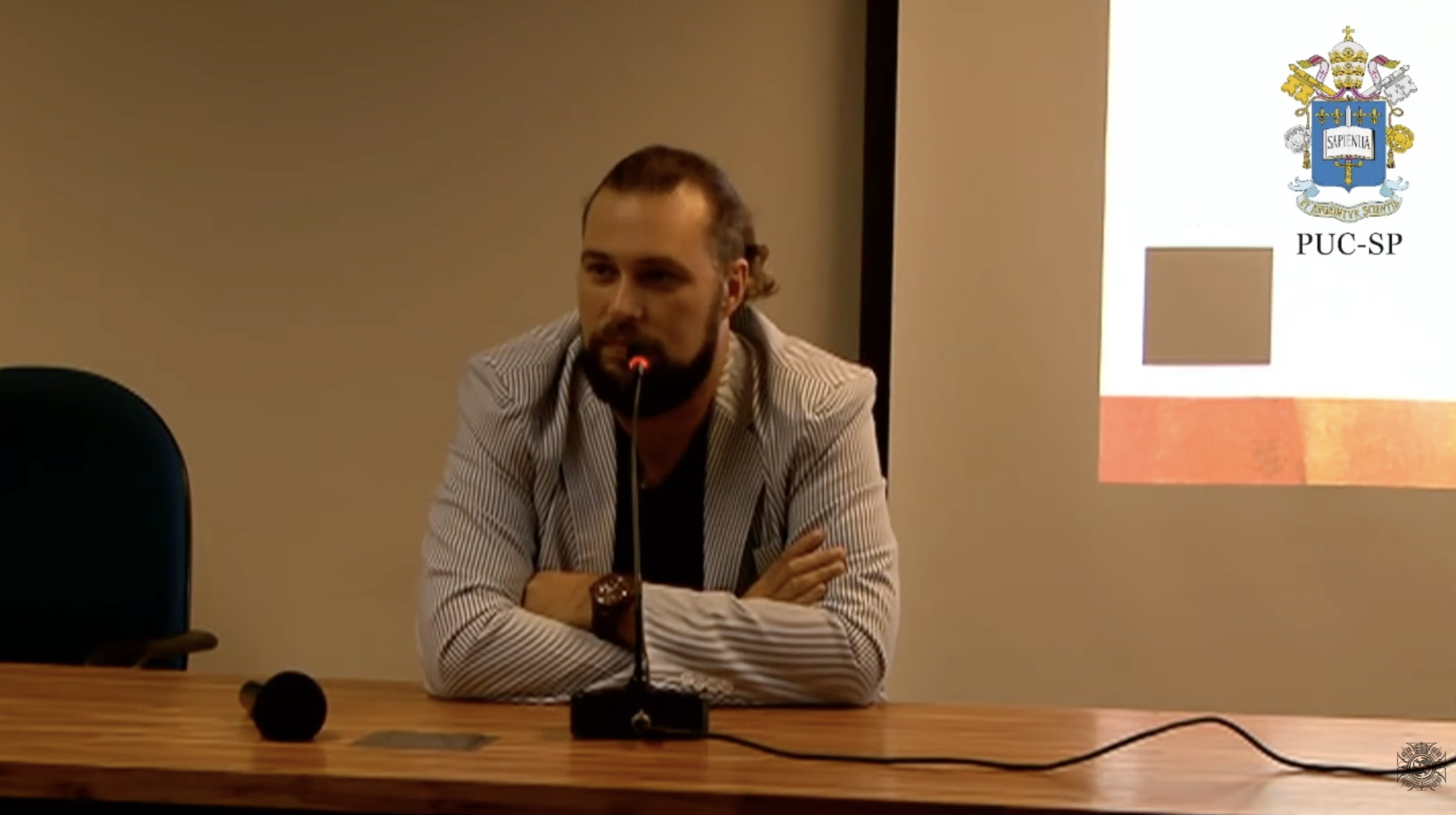
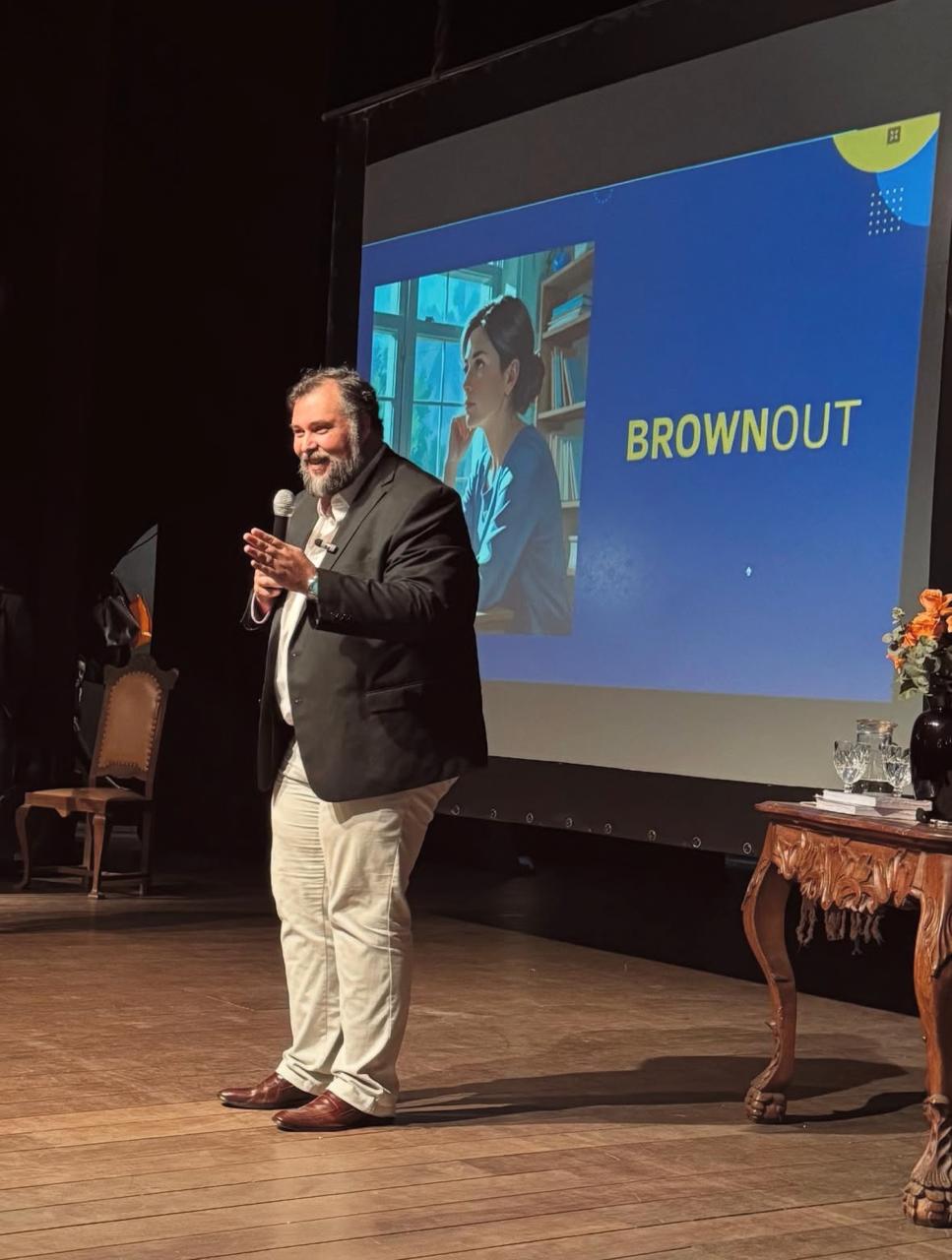
FROM HUMAN DEVELOPMENT TO INSTITUTIONAL LIFE
The settings behind a structural question: how does an environment shape the people within it?
The Institute’s programs and institutional dialogue connect Casarotto’s wider work with the themes of education, dignity and organizational life that inform his writing.
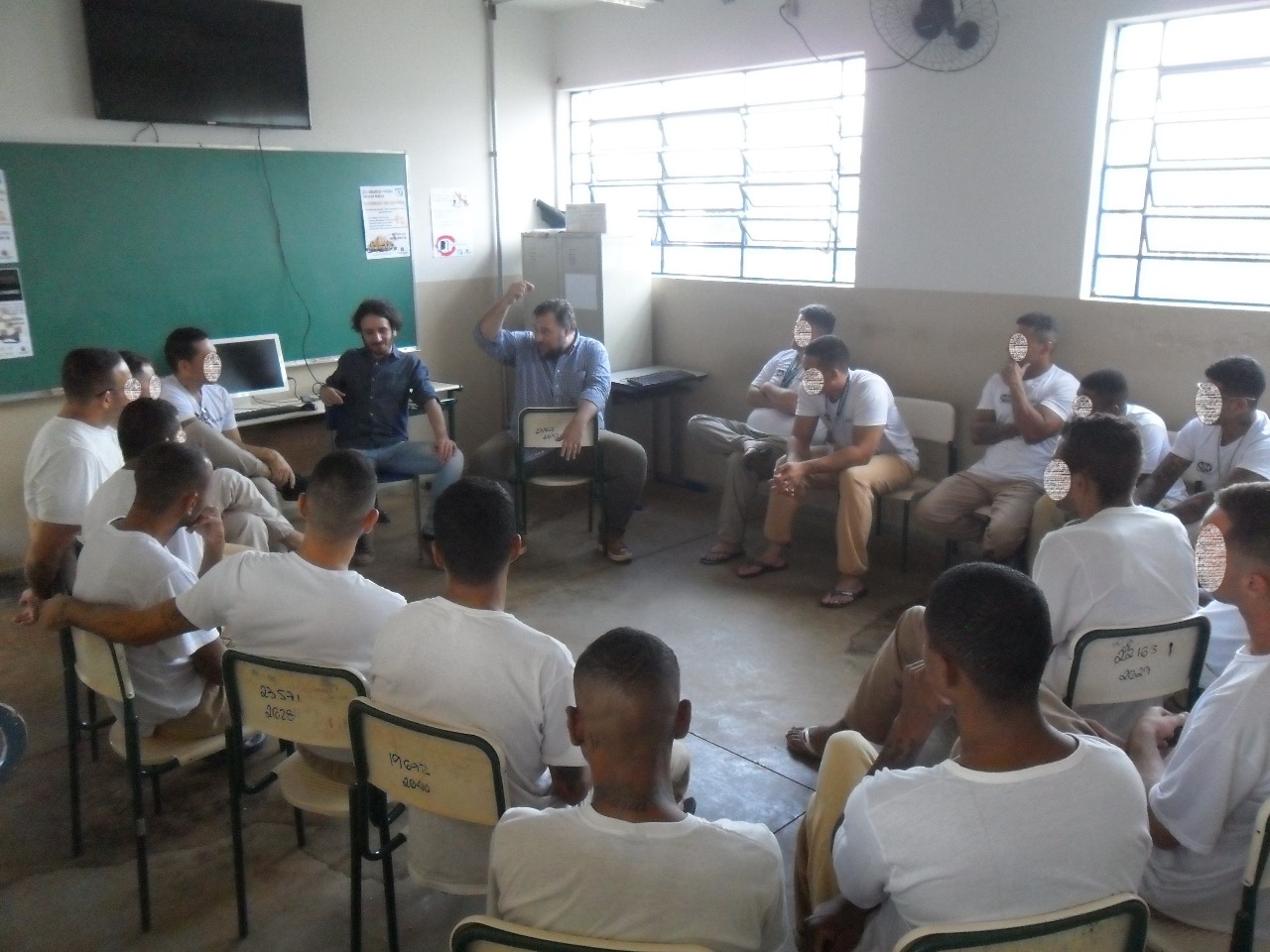
PRISONS & THERAPEUTIC COMMUNITIES
Group virtue exercises designed for institutions to conduct themselves. The Institute also develops prison humanization through routines, rules and staff training.
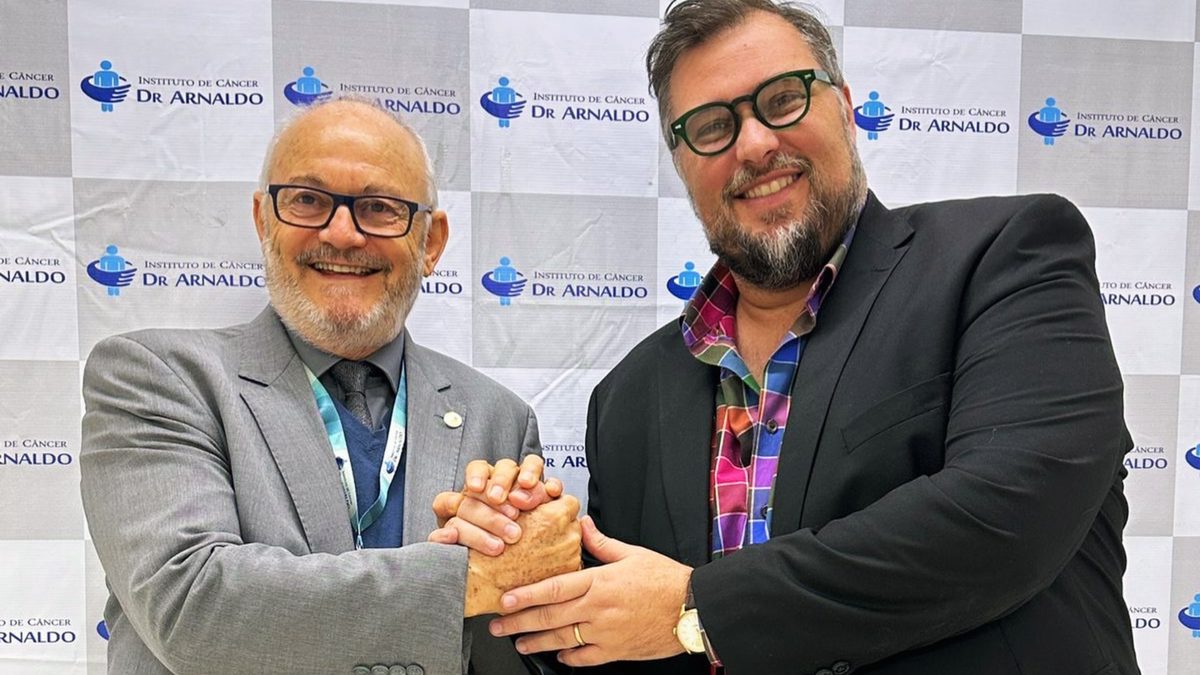
HOSPITALS & HEALTHCARE
At São Paulo’s Instituto de Câncer Dr. Arnaldo, the Institute presented a complementary-care proposal involving Virtology and Humanization 2.0.
Photograph of the institutional visit.Programs, institutional accounts and documentary photographs: Instituto Virtudes.

THE AUTHOR’S INSTITUTIONAL CONTEXT
The Institute brings together education, data analysis and research grounded in Virtology and Humanization 2.0. Its work includes schools, people in custody and people leaving prison, alongside initiatives involving mental health and the prevention of violence against women.
This experience provides context for the book’s interest in human dignity and the environments that shape everyday life.
Meet Instituto Virtudes ↗FOR PUBLISHERS & LITERARY AGENTS
Four books with distinct readerships and a shared intellectual project.
Download the editorial presentation ↓20 pages · English · PDF
Foundations of Virtology is the central reference work. The companion trilogy spans cultural criticism, the future of work and education. Each book offers its own subject and readership.
We welcome publishing discussions about the four-book programme, the complete trilogy or individual titles. Please contact the regional directors to discuss rights, territories and the materials appropriate to your list.
The trilogy’s English package includes complete EPUB and reading PDF editions, typeset interiors and cover files. Foundations of Virtology has a different editorial status: its full translation is recorded as complete, while final affirmation review and consolidation continue. Evaluation materials are available through the editorial contacts.
The three books present Casarotto’s framework and proposals. The education volume includes a research agenda and distinguishes learning principles from the specific inscription protocol.
| Title | Interior pages | English text | Formats prepared |
|---|---|---|---|
| Foundations of Virtology | To be defined | Translated; final review and consolidation underway | Evaluation extracts by arrangement |
| God Bless America | 300 | Complete | EPUB, PDF and print files |
| The Third Wave of Work | 264 | Complete | EPUB, PDF and print files |
| The Pedagogy of Inscription | 340 | Complete | EPUB, PDF and print files |
The page counts and 160 × 230 mm format above refer to the trilogy’s existing interior files. Foundations requires a separate edition plan. Final specifications depend on the publishing arrangements.
EUROPE, MIDDLE EAST & AFRICA
International Director, EMEA
Instituto Virtudes
Human Development Advisor · Certified Virtologist
THE AMERICAS
International Director, AMER
Instituto Virtudes
Certified Virtologist